From Pure Gold to Jewellery: Rolling, Drawing, and Shaping 18K Gold
From pure gold to an 18K ingot, then through rolling, wire drawing, and shaping gold into finished jewellery.
Every piece of gold jewellery begins in a much simpler form. Before it becomes a necklace or a pair of earrings, the gold exists as a small, solid bar - dense, unshaped, and full of potential. Through heat, pressure, and careful work, that bar is gradually transformed into the delicate forms we wear as jewellery.
In the minrl workshop, this transformation still follows the traditional rhythm of goldsmithing: rolling, heating, shaping, and refining the metal step by step until it becomes part of a finished piece.
Starting with Pure Gold to Make an 18K Ingot

The journey begins with 18K gold, an alloy made of 75% pure gold combined with other metals that give it the strength required for jewellery.
Pure gold is extremely soft. While beautiful, it would quickly deform if worn everyday. By alloying gold to 18K, it retains its rich colour while gaining the durability needed for jewellery.
The gold is melted and poured into a mold, where it cools and solidifies into a compact gold ingot. This small bar becomes the starting point for fabrication.
From this ingot, the metal will gradually be transformed into sheet or wire that can later be shaped into jewellery.
Melting and casting an 18K gold ingot in the minrl workshop.
Rolling and Annealing the Gold
Once the ingot has cooled, it is passed through a rolling mill, a tool that compresses the metal between hardened steel rollers.
Each pass makes the gold thinner and longer, slowly transforming the ingot into a workable strip of metal.
Working the metal in this way gradually hardens the gold, so it must be softened again through a process called annealing. The metal is heated and then allowed to cool, restoring its flexibility so it can continue to be shaped.
The process becomes a quiet rhythm in the workshop:
Roll → Heat → Cool → Roll again.
With each cycle the metal changes slightly, slowly moving toward the dimensions needed for jewellery making.
Rolling an 18K gold ingot to gradually reduce its thickness.
Drawing the Gold into Wire
Once the gold strip has been prepared, it can be transformed into gold wire.
To do this, the metal is pulled through a tool called a draw plate, a hardened steel plate with a series of progressively smaller holes. Each pass slightly reduces the diameter of the metal, gradually turning it into a fine, perfectly formed wire.
As with rolling, the gold must occasionally be annealed during this process to restore its softness.
Through patience and repetition, the metal eventually becomes a precisely sized wire ready to be shaped into jewellery.

From Wire to the Hexagons Collection
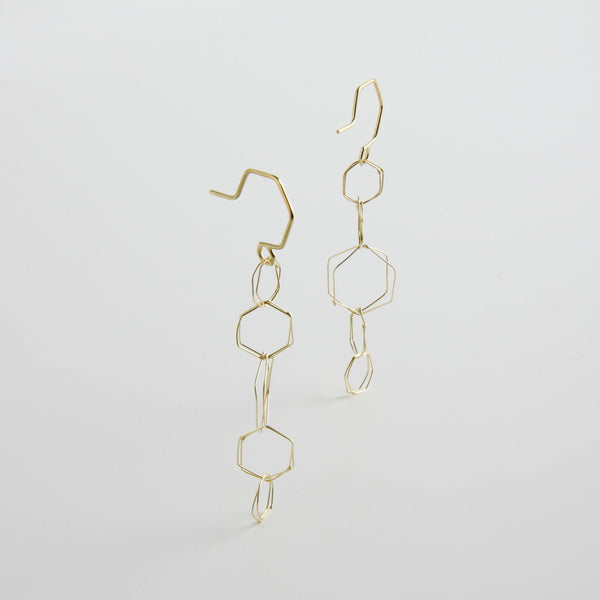
Gold wire is one of the most versatile materials in jewellery making. By bending, shaping, and soldering, it becomes possible to create structures that are both strong and surprisingly light.
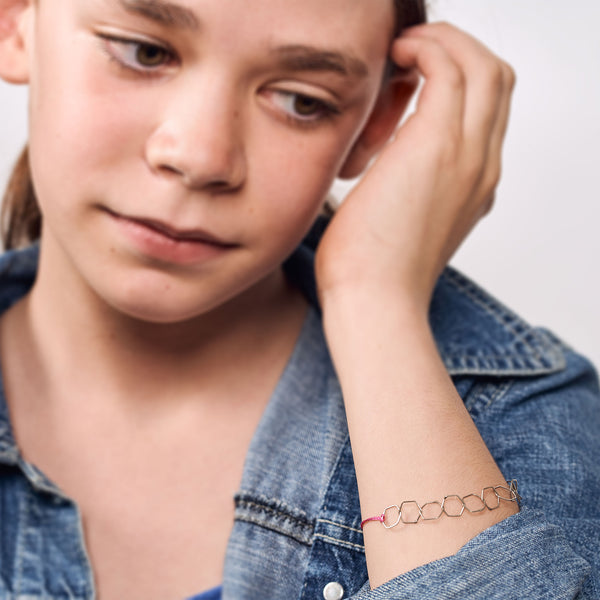
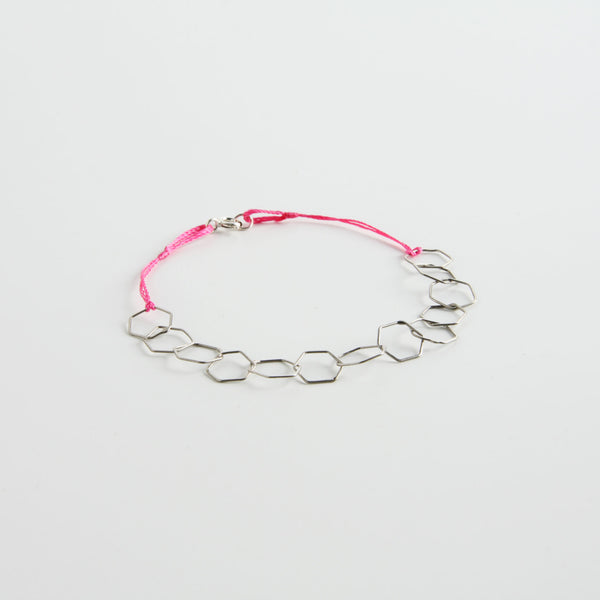
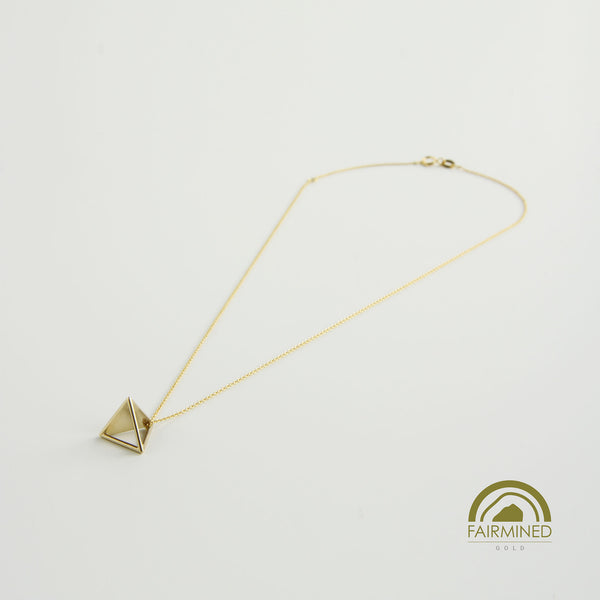
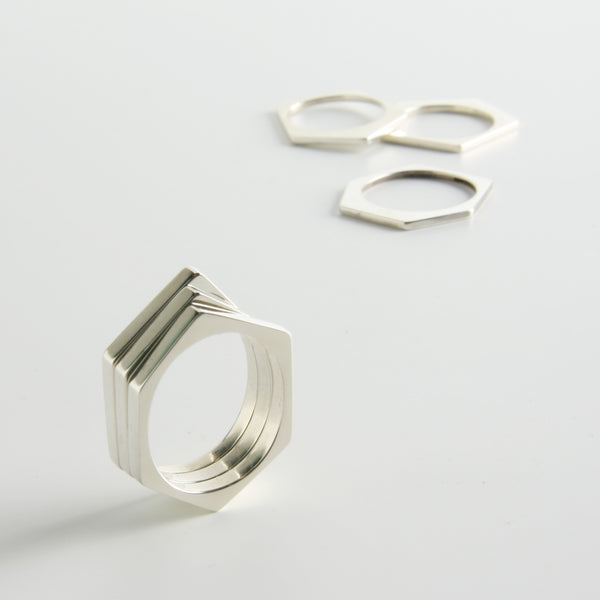
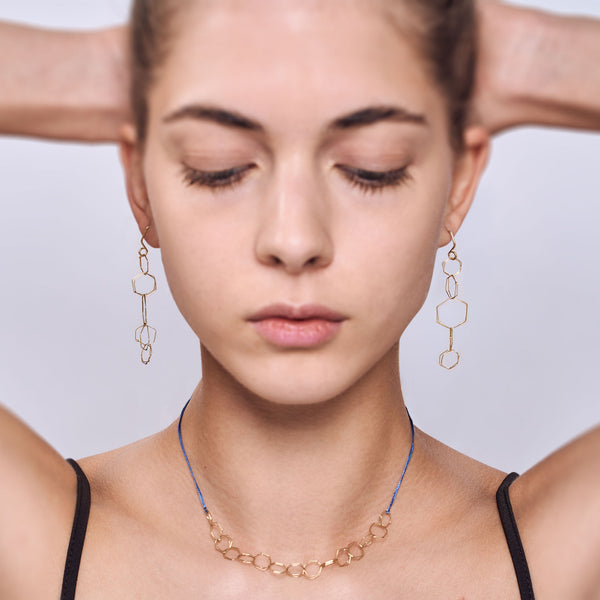
At minrl, this technique is used to create pieces such as the Hexagons Air Earrings and the Hexagons Air Necklace. These designs are shaped from carefully formed solid 18K gold wire arranged into repeating hexagonal structures.


minrl supports the Fairmined initiative. As a Fairmined licensed brand, we work with responsibly sourced gold from certified artisanal mining organisations. Ask for the Hexagons collection in Fairmined gold.
The Journey of Gold
What begins as a small bar of gold gradually transforms through heat, pressure, and patient work. From ingot to rolling mill, from draw plate to finished form, the metal passes through many stages before becoming jewellery.
Behind every minrl jewel lies this quiet transformation, a balance of craftsmanship, patience, and thoughtful design.